1999-2010
Showing posts sorted by relevance for query elvis. Sort by date Show all posts

Monday, March 06, 2006

The man who brought Elvis his scarves & water

Charlie Hodge died Friday in Decatur, Alabama.

Charlie was Elvis Presley's Army buddy. When Elvis made his Vegas comeback, Charlie gained fame as his onstage valet, handing the King his scarves and water, and collecting keepsakes from fans in the audience. In later years, he wound up doing the same for an Elvis impersonator.

Elvis, of course, figured prominently in the early years of tabloid television. His story was mined constantly. His downfall was chronicled and death foretold in Steve Dunleavy's masterwork, Elvis: What Happened? Charlie, and other members of Elvis' Memphis Mafia were interviewed time again as the Presley legend was exhumed, explored and exploited.

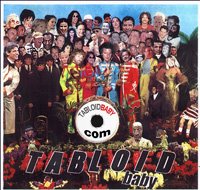
A photo of Charlie, bedecking Elvis with a scarf onstage in Vegas, was featured prominently in the A Current Affair offices in the late 1980s, as seen in a photo from the book, Tabloid Baby (detail on the right):


This website has funeral information, tributes, and this poem, which was posted today and says it all:

Charlie Hodge
by Mr. David Voisine
I was five foot three standing on a platform
so that Elvis would not have to bend a knee
handing water and wrapping those silken scarves
had brought me much laughter a place amongst his star
singing gospel music we first met up on a ship
drafted were we and so darn ill equipped
a pleasure to serve the army but more pleasure later on
when he wanted to record an album and together we sang a song
"I'll Be Home Again" and we will keep this promise
as we both right now are up with the Lord
staging a comeback career like never before
no more moody blues for me my fans and friends
only peace and contentment as I am finally with him
those sideburns and piercing blue eyes
no not Jesus Christ although he is at our side
singing along with the choirs of angels
there is now so much peace in this valley
for you the Elvis fans and for me.

Monday, September 22, 2008

Mark Day gives Steve Dunleavy his due


All too many latte-sipping American "mainstream media" professionals journos thumb their noses at true journos like Steve Dunleavy. His countryman Mark Day today gives him the honor he deserves (and be sure to read to the third-to-last graph):

The Australian September 22, 2008

Steve Dunleavy, the last of the old-school legends

ON MEDIA: MARK DAY

IT is difficult to summon the words to adequately describe the amazing life and swashbuckling style of Australia's legendary news man Steven Francis Patrick Aloysius Dunleavy. Outrageous, extravagant, inimitable and hugely successful don't do it justice.

He has been called the Keith Richards of tabloid journalism, but that's half-arsed. It should be that Keith Richards is the Steve Dunleavy of rock music.

The Dunleavy era of journalism, which began at the Sydney Sun in 1952, has ended. It kind of petered out a few months ago when Dunleavy's legs gave out.

He said it was a vascular problem; genetic inheritance and all that, but it was probably the booze. It deserved to be, for few human beings have ingested the volumes of vodka to rival Steve and lived to tell the tale.

Dunleavy will be farewelled on October 1 at the Bourbon Street Bar and Grille on New York's west side. No doubt the entire zone will be secured by Steve's mates, the New York cops, probably backed up by the city's firemen and a platoon of US Marines, all of whom he has rabidly supported with his hard-hitting, between-the-eyes outpourings over the years. His views were right wing, some would say in the extreme, but they were genuinely held, and they earned him the title of American of the Year from the good ol' boys of the lunar right in the 70s.

They don't make 'em like Dunleavy any more. As Ken Chandler, a former editor of the New York Post said: "You put him on a story and he just goes until he gets it. It's the old way of doing things. I wish I had a newsroom of Dunleavys."

Dunleavy left Sydney in the late 50s and worked in Hong Kong, Tokyo, Spain and London before arriving, destitute, in the Big Apple.

Dunleavy and I worked together in the News Limited bureau in the NY Daily News building from 1968 to 1970. Much of our work involved rewriting material to give it an Australian flavour, but that was too mundane for Steve. He got a scoop when he interviewed the notorious serial killer Albert DeSalvo, aka the Boston Strangler, in jail. The visit was approved because DeSalvo was entitled to have one visitor a month -- and no one had asked. It is a lesson for all reporters: if you don't ask, you don't get.

In this period Dunleavy also put to test Teddy Kennedy's story about the accident on Chappaquiddick that killed his campaign worker Mary Jo Kopechne. He swam the swift-flowing channel that Kennedy said he had negotiated to call help. When asked why he did it, Dunleavy said: "Because I'm from Bondi and I can."

Dunleavy was a reporter on the National Star, Rupert Murdoch's first foray into American publishing. The editor, our old bureau chief Ray Kerrison, of Cobgogla, South Australia, recalls that the Star's rival, the National Enquirer, had "paid a ransom for the exclusive serial rights to the hottest book of the decade -- Judith Exner's revelations about her affair with President Kennedy".

Kerrison says: "The book was under lock and key, guarded tighter than Fort Knox. One day, I told Steve, 'We've got to get a copy of the book and beat the Enquirer to the punch'. Steve said, 'Boss, gimme some time and I'll get it'.

"He disappeared. A few days later he turned up in my office, clutching a copy of the Exner book. I couldn't believe my eyes. 'My God,' I said to him, 'Where the hell did you get that?' Steve looked a bit sheepish and said, 'Boss, don't ask. You wouldn't want to know.'

"We 'reviewed' the Exner book in the next issue. The Star's circulation went through the roof. The Enquirer went berserk, threatening to sue us to kingdom come, etc. To this day, I don't know how Steve got his hands on that book. I dare not ask. But it was just one of his scoops in a lifetime of working the streets."

And then there was Elvis. Dunleavy met a pair of Elvis Presley's bodyguards and worked on them with liquor and charm. They told stories of the excess and madness that had turned Elvis into a gross parody of his former self, which Dunleavy cobbled together into a book called Elvis: What Happened.

It was published the day Elvis died and spent 16 weeks on top of the New York Times best seller lists. In typical fashion, Dunleavy just wrote the book, handing all rights to Murdoch as publisher. To his credit, Murdoch bought him a house on Long Island.

There are many such stories that contributed to the Dunleavy legend. But there were also moments when he was reminded that his world was not necessarily shared or aspired to by others.

Visiting Sydney in the early 70s, after more than a dozen years away, Dunleavy walked into the bar at the now demolished Invicta Hotel. A photographer from his old Daily Mirror police rounds days looked up from his beer and said: "G'day Steve. Been on holidays, have ya?"

Just as it is hard to describe Dunleavy's life without excessive superlatives, it is impossible not to mention sex. It is said Dunleavy would f..k anyone or anything for a story, and that is true.

He got a scoop for the News of the World when he wined, dined, seduced and ignobly reported the pillow-talk and tears of one of Teddy Kennedy's "boiler room" girls after the Chappaquiddick scandal. I visited him one evening in his New York apartment. He opened the door and greeted me, naked, before introducing me to a star witness in a police corruption investigation, also naked. They were engaged in an in-depth, probing interview of sorts -- another scoop.

To many women, Steve was sex on a stick. They loved his bouffant hair, his salacious eyes and cheeky patter, as well as his reputation as a pants man extraordinaire. When his exploits became grist to the mill of Burt Kearns' book Tabloid Baby, Dunleavy wrote in his Post column: "Of course, I normally would have sued the son-of-a-gun for what he wrote about me, but I can't -- it's all doggone true."

Now it's sayonara, Steve. Wherever journalists gather for years to come, they'll talk of his exploits. There'll be tut-tuts about the booze and his Rabelaisian excesses, but there will also be agreement that he was the last of the old-school legends.

I can't be in New York for Dunleavy's farewell, but from afar I'll lift a jar to one of the most enduring, generous, loyal and endearing friends of my life.

www.mday@ozemail.com.au Blog: www.theaustralian.com.au

Wednesday, March 03, 2010

The Danny Gans of Des Moines hogs spotlight with Star-Spangled Bacon

Musical impressionist Rick Ludwig, the Danny Gans of Des Moines, Iowa, is not sitting by his phone, waiting for the call from Las Vegas to take the mantle of the fallen Strip superstar. He's out there working his "i-man show," with little of the Sin City production values but a hundred and ten percent of the talent and gumption it takes to get out there and conquer another crowd with a trunk of quick-change costumes, a sound system and an incredible voice as well as knack for mimicry.

This weekend it was the 3rd annual Blue Ribbon National Bacon Festival, where Rick, in his "Big Elvis" persona, brought home the bacon with The National Anthem.


Now, sure it's funny, with the guy in the pig suit standing behind the big Elvis. But take time and listen to Rick's voice (and hang in to the very end to watch the pig and hear Rick bring home the bacon at 1:30!). The man's got the goods-- and dozens of other voices. This is wholesome, family, Gansian entertainment.

Sez Rick: "It was a rush! The bacon-covered caramel donuts were awesome! Elvis really enjoyed it!"

Chip Lightman, make that call!

From Rick Ludwig's website:

What is the i-Man Show?

What does the "i" stand for? Good question. The "i" stands for Impressionist, which is defined one way by Merriam-Webster as "an entertainer who does impressions." And an Impression is defined as "an imitation or representation of salient features in an artistic or theatrical medium; especially : an imitation in caricature of a noted personality as a form of theatrical entertainment.

That's what Rick Ludwig does when he sings and does impressions of some of the biggest artists of yesterday and today, which include... Elvis Presley, Frank Sinatra, Roy Orbison, Buddy Holly, Neil Diamond, Elton John, Billy Joel, Johnny Cash, Willie Nelson, John Denver, Toby Keith, Billy Idol, Ozzy Osbourne and Joe Cocker just to name a few.

Rick's resourceful and comedic use of costumes and props for these artists brings life to his characters and accompanies his vocal talents to make for an "impressive" and unforgettable evening of entertainment.

Who is Rick Ludwig?

Rick Ludwig is one of the Midwest's best kept secrets when it comes to variety style vocal performance and impersonations of the greatest singers since the 1950s until the present. Rick sings over 100 different songs from over 30 different artists spanning over 50 years and he also impersonates many of these artists with costumes or hilarious props. Rick's incredible 4 octave range (from bass to falsetto) allows him to do almost any song made for a man (and them some).

Rick has performed (sang) at over 3,500 shows from 1990-present, including, but not limited to wedding ceremonies, wedding receptions, corporate parties, karaoke shows, singing telegrams, senior citizen centers, nightclubs, casino shows and even funerals.

Rick began singing in public at a very young age of four in church, performing special numbers. The love for singing has always been in his blood! He is a natural when it comes to singing like the original artists and impersonating their famous moves! Rick has even been compared to the late, great Vegas entertainer/singer/impersonator Danny Gans, by some big fans of Danny's that saw his show several times.

Rick performs the oldies, classic country, new country (including hits on the radio today), classic pop and rock & roll songs and even contemporary Christian and gospel songs. He also likes to throw in a few Patriotic songs every now and then.

Tuesday, August 03, 2010

All the Elvis master recordings for $763.99

One thousand numbered sets of The Complete Elvis Presley Masters are now on sale for $763.99. The three-box set includes every Elvis recording, digitally remastered, in chronological order, from 1954 through 1974: 30 CDs, 711 master recordings, 103 additional rare recordings, more than 35 hours of Elvis music-- and a 240-page hardcover book. The set ships in October.

Thursday, June 11, 2009

Fit to print? New York Times report on Danny Gans' death by Dilaudid is penned by compromised comp queen and cover-up conspirator Steve Friess

Eerie: Danny Gans with Elvis on his shoulder (and a monkey on his back?)


Despite the current taste for full disclosure of journalistic conflicts of interest, readers of the New York Times received no such disclaimer on page A22 of yesterday's paper when the report on the Clark County Nevada Coroner's controversial findings in the death of Las Vegas superstar Danny Gans came with the byline of Steve Friess.

Friess (right) is the Las Vegas freelance writer, author of the Gay Vegas guide and comp queen whose sexual relationship with a local television news producer led him to dangerous conflict of interest and clear ethical lapses in his attempts to derail the investigative reporting into Gans' unexplained death on May 1st, an untimely passing at age 52 that was revealed this week to be the result of an overdose of Dilaudid, also known as "drug store heroin."

Friess' cover-up attempt began after we wrote him a private email on May 6, asking why Las Vegas journalists were not covering the Gans story, and he responded with a public Internet posting, calling us "a**hole," "Perez Hilton wanna be" and "vermin," and accusing us of "Danny Gans hate," among other things.

Within days, in a post titled "The Danny Gans Daisy Chain: Steve and Chip and Alicia and Norm and Miles and--," we reported on a tangled web of interpersonal dealings among Las Vegas media figures, including the revelation that Friess shares a bed with Miles Smith, executive producer of KVBC TV news, colleague of beauty queen-turned-local TV entertainment reporter Alicia Jacobs. Jacobs had gained notoriety as Danny Gans' close and personal friend for more than a dozen years.

She not only broke the story of Gans' death, but worked with Gans' manager to spin and obfsucate the facts in such an obvious manner that the Las Vegas Review-Journal TV columnist lambasted her for her "reverse bias." Steve Bornfeld wrote "there's a difference between professional relationships and personal friendships, especially one as strongly and publicly evident as Jacobs and Gans... it creates an appearance of potential bias -- viewers/readers wondering if a reporter-friend would conceal unflattering or damaging information."

"A.J.'s boundary-breaching closeness"


Today, in his Medialogy column titled "Except for Jacobs, TV stations play Gans news straight," Bornfeld again singles out Jacobs' career-damaging conflict of interest in reporting the coroner's slippery Dilaudid announcement:

"Efficient, yet elusive.

"Such was the level of coverage and nature of the story as the cause of Danny Gans' death was disclosed Tuesday, leaving local media to present question-riddled reports of a 'drug toxicity' reaction from the painkiller Dilaudid, the coroner refraining from terming it 'drug abuse.'

"And -- except for an Alicia Jacobs commentary with an Alice-through-the-looking-glass effect of seeming completely right while being thoroughly wrong -- coverage was responsible...

"Then there was A.J.

"Her statement on the 4 p.m. news, in part: 'I'm sure there will be much focus on the drugs in Danny's system, but it's important to remember that since his baseball days, Danny dealt with endless injuries. ... On a personal note, I hope we can go back to remembering the great man and the amazing entertainer and the wonderful friend that was Danny Gans.'

"That's the response of a personal confidant who should have been a detached observer, the modest leeway of familiarity she's granted as an entertainment reporter abused long ago.

"In case news reporters, unsatisfied with ending the story with this toxicology finding, investigate further, Jacobs nudges us toward Gans' injuries as justification for his use of Dilaudid. While that's a legit element of the story as stated by neutral reporters, from Jacobs it's clearly a request for compassion from a protective pal.

"Then she plants a big wet smooch on his memory that out-Mary Harts Mary Hart. Her 11 p.m. 'Stage 3' was essentially an encore...

"Jacobs' boundary-breaching closeness to Gans oddly inoculates her -- she's so known as his buddy that withholding a heartfelt tribute would flummox fans conditioned to consider the relationship acceptable, seeming like a friend's betrayal when it's actually a professional requirement.

"...Yes, she's on the showbiz beat where sympathy might seem harmless. But when soft features turn into hard news, credibility counts in every corner of this craft."


Jacobs' conflict of interest is taken into account by local viewers.

Tried to shut us down

Friess (left), who writes for a national audience who may not be up on the local towel-snapping scandals of which he's part, should have recused himself from the story as soon as he admitted on May 15th that he was involved in sending us false information about Gans' death in effort to discredit our news team and throw us off the scent. (He also took action to shut down TabloidBaby.com after we posted his photo. We have since been forced to rely on reasonable facsimiles.)

Instead, it's the Steve Friess byline that appears on a story that is given the full authority of the New York Times. The story, of course, does not mention that the coroner refused to address what other drugs Danny Gans may have had in his system, pointedly refused to answer our question of possible steroid abuse, and arranges the words in a way that, like Alicia Jacobs, excuses the use of the powerful opiate in the name of sports injury:

The New York Times
Nevada: Entertainer's Death Is Ruled Accidental


"The Clark County coroner, Mike Murphy, ruled that the death of the popular impressionist Danny Gans, left, on May 1 was an accident brought on by a toxic level of the pain killer hydromorphone, which led to heart failure. Mr. Murphy refused to characterize the death as a drug overdose or disclose the level of hydromorphone, marketed as Dilaudid, in Mr. Gans’s system. Mr. Gans’s manager, Chip Lightman, said that he was unaware Mr. Gans, 52, was taking Dilaudid, but that Mr. Gans had shoulder surgery early this year before opening at the Encore Las Vegas resort and had follow-up surgery in March to remove scar tissue. Mr. Lightman previously told reporters that Mr. Gans had a family history of heart disease and for many years had been on medication for high blood pressure. Mr. Gans became a widely celebrated mimic known for his George Burns impression after his minor-league baseball career was cut short by a foot injury. He was prone to other injuries as well, canceling hundreds of performances over the course of his 13-year headlining career on the Strip because of shoulder, back and knee surgeries."

There have been many reasons suggested for Friess' involvement in the Danny Gans death, from the mundane-- Alicia Jacobs is supporter of same sex marriage and was the "celebrity" guest at his unofficial second marriage to Miles Smith at the Palms Hotel-- to his allegiance to Gans' employer, casino magnate Steve Wynn.

Friess picked up the Gans story on his own Vegas-boosting website on Tuesday and spoke as an authority on at least one radio station without mentioning his embarrassing missteps.

He did not post again until late this afternoon when he wrote about Englebert Humperdinck.

That Darn Norm

Then there's Norm Clarke, the colorful, nationally-known Las Vegas Review-Journal gossip columnist who has printed much of Jacobs' and Friess' planted stories that led the public farther from the truth about the life and death of Danny Gans.


In the days leading up to the coroner's hastily-called and carefully-worded news conference, Norm had been in Washington D.C, merrily Twittering his every move, from meals to exhibits at the Smithsonian.

His pure joy at reporting gossip and his evident innocence in the cover-up planning was exhibited in his Wednesday column about Danny Gans, when, hours after we drew the comparison, he guilelessly put a most sunny, even excited spin on the news that Gans had overdosed on drug store heroin:

NORM: Presley and gans linked by Dilaudid

"Danny Gans and Elvis Presley had something else in common, besides dying young.

"Both entertainers were linked after their deaths with Dilaudid, a highly addictive opiate nicknamed 'drug store heroin.'


"...According to numerous published reports, Dilaudid, said to be two to eight times more potent than morphine, was Elvis' favorite drug.

"Gans, a vocal impressionist, included a karate-kicking overweight Elvis among his spoofs of musical greats.

"Gans, a Las Vegas headliner since 1996, was 52.


"Elvis was 42 when he died Aug. 16, 1977, in Memphis, Tenn."


Viva Las Vegas...


Danny Gans photo: Ralph Fountain/Las Vegas Review-Journal

Friday, November 27, 2009

Exclusive! Lewis Bailey's Christmas playlist!


A few days after we brought you the playlist for the Disneyland's Main Street USA Christmas music loop, A CD arrived in the Tabloid Baby mailbox containing Lewis Bailey's latest Christmas mixtape. The world-renowned videographer, photojournalist and homebricker from Bailey Mountain, Georgia, is also Tabloid Baby's country music expert, so we were more than a bit surprised to find barely a country song among the lot-- unless you count Rockin' Around The Christmas Tree by Bailey cousin Brenda Mae Tarpley-- but settled in for a long car ride as we were transported back to the days we'd pick up the Christmas compilation albums at the Firestone Tire store.

The list of Lewis' Yuletide selections follows. Now find the songs!


Sleighride Leroy Anderson
Run Run Rudolph
Chuck Berry
No Place Like Home for The Holidays
Perry Como
It's Beginning To Look A Lot Like Christmas
Perry Como & The Fontane Sisters & The Mitchell Ayres Orchestra
Christmas Island
The Fontane Sisters
White Christmas
Bing Crosby
Sleighride
The Andrew Sisters
Jingle Bell Rock
Bobby Helm
Santa Claus Is Back in Town
Elvis Presley
Rockin' Around The Christmas Tree
Brenda Lee
Please Come Home for Christmas
Charles Brown
Blue Christmas
Elvis Presley
Let It Snow
Vaughn Monroe
Merry Merry Christmas
Baby Dodie Stevens
Here Comes Santa Claus
Gene Autry
Merry Christmas Baby
Charles Brown
I'll Be Home for Christmas
Elvis Presley
Rudolph The Red Nosed Reindeer Gene Autry

The Christmas Song
Nat "King" Cole
Santa Baby
Eartha Kitt
Santa Claus Is Coming To Town
Bing Crosby & The Andrews Sisters
Silent Night
Bing Crosby
Silver Bells
Margaret Whiting and Jimmy Wakely
White Christmas
The Drifters
Winter Wonderland
Louis Armstrong
Please Come Home for Christmas
The Eagles
Holly Jolly Christmas
Burl Ives
Christmas (Baby Please Come Home)
Darlene Love
Have Yourself A Merry Little Christmas
Judy Garland

Wednesday, June 10, 2009

Despite spin from coroner and Las Vegas media, the sad truth remains: Danny Gans died from using Dilaudid, the opiate favored by Elvis & Anna Nicole

Las Vegas Sun

Impressionist Danny Gans’ death was accidental and the cause
was hydromorphone toxicity due to chronic pain syndrome,
Coroner Mike Murphy announced this afternoon.

Hydromorphone is a synthetic opiate
more commonly known as Dilaudid.

Danny Gans was a superstar. Danny Gans was a family man. Danny Gans was an athlete. Danny Gans was an exemplar of Born Again Christian values that were part of his official biography and a major art of his appeal. Danny Gans was the wholesome, corporate clean standard bearer of Las Vegas Nevada, a resort destination known the world over as "Sin City."

Whatever pain and human frailties this man endured, he realized he had to endure in private. And after he died, unexpectedly, unexplainedly, on May 1st, in his home, the media in his town kept his secrets, deciding to not report about the prescription drugs found by paramedics in the room where his body was found, the rumours of steroid use that were rampant throughout entertainment circles, or any hint of human weakness.

So the long-delayed announcement today by coroner Mike Murphy that Danny Gans died because of "hydromorphone toxicity due to chronic pain syndrome," the phrasing was deliberate, the language was perfected to Clintonesque perfection to disguise the sad reality:

Danny Gans died from the use of Dilaudid, hydromorphone, an opiate narcotic used to treat severe chronic pain, the drug a favorite drug of Elvis Presley, and a drug he took on the day he died, as well as the drug favored by Anna Nicole Smith.

Two reporters for The Las Vegas Review Journal reported on the death this morning with a lead that reflected the whitewashing, tone favored by editor Tom "McCloud" Mitchell, but a second line that was a journo's demand for clarity:

"Impressionist Danny Gans’ death was accidental and the cause was hydromorphone toxicity due to chronic pain syndrome, Coroner Mike Murphy announced this afternoon.

"Hydromorphone is a synthetic opiate more commonly known as Dilaudid."

At his press conference Tuesday, the coroner was Danny Gans' greatest defender, insisting, "This was not drug abuse. What I’m trying to be clear about is, we have an issue involving Mr. Gans’ health and the hydromorphone, and as a result of a combination of those issues, Mr. Gans succumbed to his health condition.”

Mike Weatherford and Brian Haynes summarized his findings in the Review-Journal:

"Dilaudid was 'a factor in exacerbating those risks' of his pre-existing conditions, hypertensive cardiovascular disease and polycythemia, a thickening of the red blood cells often described as 'the opposite of anemia.'"

They added, pointedly:

"Dilaudid's analgesic potency is from two to eight times that of morphine, but it is shorter-acting and produces more sedation than morphine, according to the Drug Enforcement Administration."

The coroner would not report what other drugs were found in Gans' body. “We are trying to respect (the Gans family's) privacy and treat them appropriately as we deal with all families... They’ve been very good to work with.”

Sadly, it is Chip Lightman, Gans' manager, who led the charge to protect his client's reputation through these six weeks of mystery, who for once is left without spin, flailing and asking if his client was on the powerful narcotic because of shoulder surgery in November.

“Could they have given him that during his recovery? I don’t know where he would have gotten (Dilaudid) from but from his doctor, that’s all I could figure.”

Where did Danny Gans get the Dilaudid?

Did he have a prescription for the drug?

Why, if Danny Gans had a heart condition, would he be prescribed a drug that could lead to a heart attack?

Was this really "accidental"?

How could Las Vegas' symbol of clean-living Christianity fall to the same toxicity that brought down Elvis and Anna Nicole?


With the coroner's conclusions, the story of the death of Danny Gans is only beginning to unfold...

Wednesday, January 27, 2010

Rick Ludwig is the Des Moines Danny Gans


Will Las Vegas ever see another Danny Gans? That's like asking of Las Vegas will ever see another Elvis, Louis Prima or Cook E. Jarr. The likes of the musical impressionist, with his special mainstream gifts, unique background and mysterious life, will never be seen again-- not that there aren't many who would assume his mantle if given the chance.

There are the obvious Gansabees, like Frank Caliendo toiling at the Monte Carlo, or Larry G. Jones, working just off the Strip with Gans' old drummer and pal Raphael Erardy, but one man who just may be working his way toward Gansstyle greatest is plugging away in Des Moines, Iowa, chasing his dream through Singing Telegrams, Phonegrams and karaoke in the voices and personnae of Elvis, Frank Sinatra, Willie Nelson, Elton John, Billy Joel, John Denver, Johnny Cash and-- well, you name it.


Rick Ludwig is his name. Remember that name. We were led to the YouTube video again through a "Danny Gans" Google alert. The video description says:

"Similar to show like late, great Danny Gans in Las Vegas. Visit www.imanshow.com. Demo lasts about 6 min. with costume changes for 11 different artists in this order... Elvis Presley, Buddy Holly, Roy Orbison, Frankie Valli, Frank Sinatra, Elton John, Billy Joel, Johnny Cash, John Denver, Willie Nelson and Toby Keith. For hire 515-208-1782 or visit imanshow.com."

Who cares that it's an "i-man" show? Look past the production values and see a true artist with quite a set of pipes. America's Got Talent, look no further...

Thursday, March 01, 2001

The Hartford (CT) Courant: Tabloids Turning Mainstream

By MARY K. FEENEY; Courant Staff Writer

It's no big news when the National Enquirer splashes celebrity scandal across its cover. But when the tabloid scoops the mainstream media on national stories twice within several weeks, editors and reporters snap to envious attention.

The Enquirer broke a story in January about Jesse Jackson's illegitimate child (and another in the Feb. 27 issue about an additional affair). Last Friday, it printed the blockbuster that Hillary Rodham Clinton's brother, Hugh Rodham, received (and then returned) $400,000 for his help in two presidential pardons.

Enquirer editor Steve Coz was featured Sunday on CNN's ``Reliable Sources'' with Washington Post writer Howard Kurtz, and the tabloid was featured in Kurtz's media column the next day. Several major news outlets, including USA Today and Salon.com, paid homage to the newspaper, which recently dished the dirt on the Anthony Hopkins-Martha Stewart romance.

But instead of admiration, perhaps the more appropriate emotion might be embarrassment.

``The thing is, the so-called mainstream media has a long history of having their cake and eating it, too, by allowing the so-called tabloid press to do their dirty work, investigating and putting stories out in the marketplace that mainstream media feels is beneath them,'' said Burt Kearns, former executive producer of ``A Current Affair'' and ``Hard Copy'' and creator of the tabloid news site www. tabloidbaby.com.

The Jackson story is one example. The Chicago and Washington media knew about it but didn't report on it.

``There are some stories they don't want to break. The Jesse Jackson love-child story was a totally legitimate story,'' Kearns said. ``Here was Jackson counseling Clinton during Monicagate, and setting the spin for the rest of the country as to how to behave. ... But they [the mainstream media] felt it was beneath them.''

At the same time, the mainstream media has been lurching toward a tabloid sensibility. So the Enquirer's recent exclusives are, in a way, doubly humbling for the traditional press, which finds itself reluctantly casting nets in the murky waters of gossip and getting whupped by its most notorious purveyor.

``On the other side, the National Enquirer is often the publication that gets it right. All of a sudden they were getting scooped by this trashy publication that was read mostly by ladies in trailer parks,'' said Jeannette Walls, MSNBC gossip columnist and author of ``Dish: The Inside Story on the World of Gossip.'' Whether you approve of their methods, Enquirer reporters are skillfull and aggressive, and the paper has 25 people ``who fact-check stuff up the wazoo,'' Walls said.

The Enquirer is, in a way, a victim of its own success.

Walls said the trend toward tabloidism all began with the death of Elvis Presley in 1977, a moment when newspapers and magazines realized that to ignore Elvis was to lose readers.

``As more mainstream publications went tabloid, they started eating away at the National Enquirer readership. The more publications covering this turf, the less need there was for the National Enquirer,'' Walls said.

When the O.J. Simpson story broke, every news outlet was chasing it.

``It was sort of horrible for the folks at the National Enquirer trying to elbow aside The New York Times and ABC News. The sort of story that would have been exclusively the National Enquirer's turf was now in the mainstream media,'' Walls said.

As tabloid news osmosed into newspapers, television and the Internet, circulation at the Enquirer fell from its peak of about 6 million after Elvis' death (when the idol in his coffin graced the front page) to roughly 2.1 million today. Unlike many other publications, the Enquirer depends heavily on newsstand sales (19 percent of its circulation comes from subscribers, according to Audit Bureau of Circulations figures from June). And most issues are not fat with ads from major companies.

Now it appears the Enquirer is repositioning itself to recapture some of that circulation, with increased attention to political scandal.

In his CNN interview, Coz said that while the Enquirer has broken major political stories in the past (including those involving the Donna Rice-Gary Hart affair and Lewinskygate), it is ``walking in the direction of mainstream journalism in that mainstream journalism spends a lot of time and energy covering Washington. And between that and Bill Clinton, Washington politicians are now celebrities.''

``We are putting a big, big push on Washington, and we have two stories in development right now,'' Coz told Kurtz.

Coz, asked whether checkbook journalism figured in the Jackson or Rodham stories, replied that it was not ``the driving force. We do pay for information. In this particular case, the payments were not made to anybody that was a principle source.''

In an interview with USA Today, Coz said that many reporters grease the skids by buying dinner for sources. ``We just skip the dinner,'' he said.

For the great majority of journalists, paying for information is a line that cannot be crossed.

``There's a very big difference between paying cash to sources for information and the practice of reporters picking up the tab at dinner when they talk with their sources,'' said Robert M. Steele, a senior faculty member and ethics group leader at the Poynter Institute.

``I do believe that anytime we pay sources, we create at least the perception of an eroded credibility,'' Steele said. ``And it raises natural questions as to whether people are giving information for their own purposes that is tainted by motives that include financial gain.''

Kearns and others said that viewpoint may be a little naive today.

``I think that's great when you're blowing dust off volumes in an ivory tower. But right now, news information is a product, whether you're on Page One of the Washington Post or being featured on '60 Minutes.'''

And the Enquirer hasn't been alone in offering incentives for news.

``I think the mainstream press has paid for news for a long time in ways they will not acknowledge. '60 Minutes' has a long history of paying for stories, but they hide it. They will pay the lawyer [for a source] as a consulting fee,'' said Walls.

Payoffs aside, the Enquirer has gained a measure of respect for breaking the stories and is probably being read in more newsrooms than ever. But will it ever, or should it ever, change its spots?

``I think the National Enquirer can do great work, but it's very hard for any publication to reposition itself,'' Walls said. ``The National Enquirer is kind of synonymous with sleazy tabloid journalism, whether or not it deserves that label ... .

``It's a little bit like saying you're a clean wrestler, but that's not going to do you any good,'' said Walls.

Tuesday, October 17, 2006

Engelbert makes the list of best live albums ever

No music collection is complete without the live albums seen below. For years, the list has remained stable, but now, unexpectedly, from out of nowhere, another monster live set enters the pantheon of the greatest live music albums ever recorded.

Totally Amazing is a 22-track collection recorded somewhere out there on the Indian casino and Vegas showroom circuit, and it’s a powerhouse performance by a man who represents the best of a vanishing breed: the singer who stands alone in a tuxedo before a big swinging band, armed only with a microphone, charisma and a voice that brings down the house.

That man is Engelbert Humperdinck.

Engelbert has never gotten the respect he deserves. With his romantic, string-washed backing and schmaltzy country western repertoire, the sideburned Casanova was always an also-ran to his to Sixties stablemate Tom Jones. But life in Vegas, high-roller showrooms and a thousand theatres-in-the-round as an Elvis standard-bearer has honed his voice and act into something magnificent. Backed by a powerhouse band that includes an uncredited sax player who gives Sam Butera a run for his money, Engelbert rolls out the hits, standards and entertaining curveballs with a self-deprecating humour and saloon singer command before an enthusiastic crowd that based on the singalongs (and he does the singalongs better than Do Ho in his prime) is made up entirely of women!

They don’t make albums like this anymore, not since the 1960s and 1970s, when Humpy was in his prime. Now, at age 70, marking his fortieth year in the business, Engelbert has created a modern classic, with a pristine sound, taking the listener inside the showroom experience that culminates with a very distinct version of My Way.

This is the sound of Elvis Presley if he'd taken care of himself. This is Tom Jones if he grew up. This is what Robbie Williams should strive for. And on the back cover photo, Engelbert is almost indistinguishable from Gene Simmons.

Totally Amazing is totally amazing! It’s up there with Sinatra at The Sands, Sammy Davis Jr. at The Cocoanut Grove as one of the best live albums ever recorded! No kidding!

The live list:


Wayne Newton In Person!... Sinatra at The Sands... Tom Jones Live in Las Vegas... Sammy Davis, Jr. at The Cocoanut Grove... Elvis: The Alternate Aloha Concert... Don Ho Live at The Polynesian Palace... Allen Sherman, the Boston Pops & Arthur Fiedler: Peter & The Commissar... Oasis: Familiar To Millions... Merle Haggard: Okie from Muskogee, Recorded Live in Muskogee, Oklahoma...Slim Dusty Live at Wagga Wagga... Louis Prima, Keely Smith & Sam Butera: The Capitol Sessions... Donny Hathaway Live... Johnny Cash at Folsom Prison... The Allman Brothers Live at The Fillmore East... Darin at The Copa... and introducing... Engelbert Humperdinck: Totally Amazing!

That's Tabloid Baby's list. Did we leave anyone out?

Sunday, February 14, 2010

Rick Ludwig: The Danny Gans of Des Moines is ready to take his act to Las Vegas


Attention, Las Vegas! Rick Ludwig is prepared to step up to fill a big pair of red socks and black-and-white spectator shoes.

We told you about musical impressionist Rick Ludwig and his "i-man show" as part of our series on artists across America who plow on, inspired by the work, life and example of Danny Gans.

Some rely on a tux, a microphone and a band. Rick Ludwig does it all, with costumes, props, and his own musical accompaniment, and as a result he is the one-man musical impressionism star of greater Des Moines, Iowa, and definitely qualifies as one of the hardest-working men in show business. Definitely a homegrown Heartland talent, he's dedicated to his family and community, while working overtime at entertaining with everything from DJing to karaoke parties to singing telegrams to his locally legendary i-man shows wherever he can pull out his trunk and set up.


Last night, it was the Prairie Meadows Racetrack & Casino in Altoona. Tonight, Trophy’s Sports Bar & Grill in Des Moines. Soon, Caesars Palace on the Las Vegas Strip? In an exclusive online interview, Rick Ludwig tells us he’s prepared to bring his act to Las Vegas and, just maybe, fill the void left by the passing of the great Danny Gans. And like Garth Brooks, who took over the showroom Danny Gans left vacant, he’s willing to fly in on weekends so he can have the rest of the week with his wife and kids.

Tabloid Baby’s Sam Peters put up the questions .

So, you’re obviously a big talent. What shows have you got lined up?

All local Des Moines shows for now. Haven't pursued too much nationwide yet, but I wouldn't rule that out for future. Still fine-tuning the show here locally.

How long have you been doing your show?

My very first i-Man show was New Year's Eve 2007, which was the low-quality (I apologize) video that you have seen on YouTube. However, I have been singing since I was 4 in my mom's former church in front of 100 or so (so that would be 1970 roughly).


In 1985, I began as a part-time DJ while attending Central College in Pella, Iowa (Harry Smith's college). In 1991, I purchased my first karaoke system, began doing it at private parties and weddings and then expanded into the clubs in 1993.


In 1994 I left my day job as a computer programmer and in 1995 when full-time into the DJ & Karaoke business.


I began singing in clubs as a performer in about 1996-1997. Began doing Singing Telegrams around 2001.

So you’re a show biz vet. Are you a native of Des Moines?

I’m from Ottumwa, Iowa. That’s the hometown of Tom Arnold and, fictionally, Radar from M*A*S*H. I moved to Des Moines in 1989 to begin a day job at the Principal Financial Group downtown.


Say you get the call from Sin City. Would you be willing to relocate?


If the right opportunity came along, I might be willing to relocate in a few years, once my kids are a bit older. I have four (three girls aged 14, 7 and 6, with one boy, 13). However, I think it would be fun to maybe perform in a Las Vegas casino one or two nights a week-- say a Monday or Tuesday-- and then fly back home to Iowa. Airfare is cheap from DSM to Vegas.

A talent like you was bound to get noticed. Have you ever applied for a show like America's Got Talent?

As for American Idol, was always too old. They need Geezers Got Talent or Old Farts Got Talent and I'd be all over that. Just kidding. I haven't done the America's Got Talent because I'm way too busy with my DJ, Karaoke and Singing Telegram business. I don't know when I'd get time off! I guess it wouldn't hurt to pursue some day and give them a taste of i-Man or something.

I did win $2,500 in a karaoke contest at Prairie Meadows in Altoona back in 2007. I got second place, dressed as my Big Elvis and Disco Dude characters (kind of a pre-cursor to i-Man, I think). I used some of that money to buy additional costume stuff. (See pictures on RickLudwigShow.com.

Of course, it all gets back to Danny Gans. How did The Man of Many Voices inspire you?

A couple visited one of my karaoke shows back in 2006 while I was singing a few Elvis and Johnny Cash songs. I wasn’t in costume, just imitating their voices, and they told me I reminded them of Danny Gans from Las Vegas, who they went to see at least once a year. I said, “Danny who?”

I basically lived under a rock at that time, because I had only been to Vegas twice before that for DJ conventions and still didn't know who Danny Gans was. A few weeks later, this couple returned to the show with a videotape of Danny Gans and loaned it to me to watch. “Wow! That's what I wanna do” I said.

Maybe not Vegas right away, but I loved the idea of imitating voices and also dressing the part.

So that's how I got hooked. I went to see Danny in February 2007 during a DJ convention and I was like a little kid in a candy store. He was awesome!!!


Okay. You run the gamut. But what are your favorite impressions?

Elvis, Johnny Cash, Elton John and I do a split-personality character of half Toby Keith, half Willie Nelson. I sing the duet Beer For My Horses, doing both parts back and forth. lol. People go crazy over that one. It's unique for Iowa.

I also just added Ozzy costume and am still working that one out.

See Rick Ludwig live tonight at Trophy’s Sports Bar & Grill iN Des Moines tonight from 7 to 10, and next Saturday, February 20th at Rookie's Sports Bar & Grill 9-1 in Clive, Iowa.

Sunday, January 09, 2000

The Sunday Age: The New York Postman

Melbourne, Australia

by ANDREW RULE

STEVE Dunleavy is at the bar, telling war stories. He is as thin as the wisp of smoke curling from the cigarette in one hand, but his voice is as strong as the vodka and tonic in the other, the accent almost surviving 40 years away from home.

He's on the natty side of well-dressed, still handsome in a rakish way, with the trademark quiff of silver hair that, a lifetime ago, was surely a Sydney lair's sharp brushback.

The wide boy from Bondi has been called a lot of things in his time, not all of them printable, but one description - ``the Keith Richards of journalism"- gets him pretty right, even if he does look more like Peter O'Toole than a Rolling Stone. The comparison underlines not just his astounding survival of decades of hard living but his fierce dedication to his craft. 

It's only rock'n'roll but he likes it, and has stayed true to his one true love, resisting temptations to do something easier than chase the next story. And, at 60, he's still got what it takes to make the grade in Gotham City.

Building a reputation as the ultimate tabloid newshound has made Dunleavy famous, if not rich, in his adopted country. His boss, Rupert Murdoch, might be the most powerful Australian in America, but he wouldn't be as recognised - or as loved - in the street as Dunleavy, who's worked for him for years.

These days he's back writing a column for the New York Post, the smudgy tabloid he made infamous in the 1970s and 1980s before playing his part in taking the genre to television.

Not that Dunleavy wastes much time at the Post office, which is on the 10th floor of the Sixth Avenue skyscraper from which the man he calls ``The Boss" rules the News empire. If he's not out of town on assignment, then he's mostly in his usual spot here at his usual bar, an upmarket Irish pub called Langans in West 47th Street around the corner from the News building in midtown Manhattan.

On the wall behind the bar there's a poster with a picture of him over the slogan DUNLEAVY FOR PRESIDENT. He holds court among a floating group of media identities who drop in during the afternoon to tell him things and hear him dispensing advice, wisecracks and stories from a bottomless fund garnered over 45 years on the road and polished smooth with time and re-telling.

When he was a kid on the Sydney `Daily Mirror' Dunleavy let down the tyres of a rival to beat him to a crime scene. The rival was his father, Steve Dunleavy senior - a photographer for the Sydney `Sun'. Later, father and son were rivals again in the chase after the `Kingsgrove Slasher'. Young Dunleavy hid in an outhouse, hoping to catch the crook and cover himself in glory, when he heard the deadbolt lock the door from outside. He stayed locked in while the `slasher' was arrested a few yards away. The man who turned the lock? His father, paying him back for the flat tyres.

Dunleavy is charming and courteous to all, but tough as well - somewhere between an old ballroom dancer and an old lightweight fighter. Which isn't surprising, as he did a bit of both in his youth. Put him in a bow tie and he'd be the boxing referee from central casting - a surefooted showman at home in centre ring. Poker-faced, nimble - and as wise, as Runyon would have said, as a treeful of owls.

It's tempting to think Runyon would have loved Dunleavy. If only because the Australian who found his spiritual home in New York City is perhaps the closest thing living to the legendary newspaperman who also migrated there - from the west - nearly a century ago.

Runyon dearly loved characters, and as a character Dunleavy is 24-carat box office. People are drawn to him.

Burt Kearns, for instance. Young enough to be Dunleavy's son, Kearns arrived in New York City from a sleepy suburban newspaper the night John Lennon died, and elbowed his way up in television newsrooms before getting his big break - working with Dunleavy and several other Australians to set up the hugely successful but shortlived tabloid show A Current Affair.

It was a rollercoaster ride, and it prompted Kearns to write a book about the era - a rollicking number called Tabloid Baby billed as ``the first and best insider account of a movement that changed the face of television news".

Kearns, now a television producer based in California, is back in New York to launch the book. It's during the launch that he coins the Keith Richards' line about his old mate, whom he treats as a lovable but eccentric uncle. There's plenty more where that came from, in the book.

``Dunleavy, the ageless legend with his silver pompadour, eagle beak profile and rakish charisma, was the paragon of everything that made journalism romantic and dangerous," he writes.

``He was friend to cops and criminals, bums and kings. He knew the words to any show tune you could toss at him. He could do more dialects and accents than Sid Caesar. He was a master raconteur and joketeller, his words a perfectly constructed Shakespeare of the street."

Dunleavy, sent to cover an execution, had been invited by the prison authorities to witness the condemned convict's death. He watched as guards buckled the terrified man to the electric chair with large seatbelts, winced as smoke rose from the twitching body when the current was turned on. Later, he leant over to one of his crew and stage whispered: ``Who says seatbelts save lives?"

The old street dog, as Kearns calls him, would do anything to get a story, but remained pure by his own peculiar standards - untainted by pretension and hypocrisy, although he'd plead guilty to most other vices.

He was one of a push of larrikin Australians who, working for Murdoch, the outsider, recruited American disciples like Kearns and tilted at the established networks' television news - eventually changing American news coverage forever. It was intoxicating at the time- though not necessarily, he admits now, for the better.

Dunleavy had become a star of print with the Post at the height of its fame - the Son of Sam serial killer coverage and ``Headless Body in Topless Bar" headline were in his time. But after switching to Murdoch's television enterprise he became a national figure on prime-time television. By the time he returned to his desk at the Post three years ago he was a legend of the tabloid genre he had helped define in the United States.

He was, some say, the inspiration for the tabloid reptile reporter in the film Natural Born Killers.

Then, of course, there were his books.

With a wife he ghosted The Happy Hooker, the memoirs of call girl Xaviera Hollander. His novel, The Very First Lady, concerned a woman who murdered her way to become the first female US President. But it was Elvis: What Happened? that really made his name. The book, which exposed Presley's sordid life of drugs and violence, was instantly controversial because the King of Rock died only two weeks after it was published.

Dunleavy made about $25,000 from the Elvis book, a tidy sum in 1977, but nothing compared with the millions the best-seller made for Murdoch. Dunleavy didn't care. He was happy to get the story first, driven only by the fear that he'd be beaten and content that his junkyard-dog loyalty would be rewarded by an organisation that would take care of him for life.

Once, during his time in television, Dunleavy responded on camera to charges by another author, Albert Goldman, in `Life' magazine, that his book had caused Presley to kill himself.

The interviewer, a friend, put Goldman's accusation to Dunleavy, who snatched the magazine and threw it to the studio floor, snarling: ``This is absolute garbage!"

The director asked him to do it again. Dunleavy shrugged, smiled calmly, then did it all again, snarl and all. Take two.

Afterwards he grabbed a colleague and said, deadpan, ``This book, this accusation that I killed him, that he committed suicide, mate-" His eyes lit up and he blurted gleefully: ``I really think it's true, you know! I think I really killed Elvis."

These days he has the column - often filed from Langans bar - the Manhattan apartment, the Long Island house, and the reputation that makes every day like an episode of This Is Your Life. It's a long way from where he started.

Born at Bondi just before the war, he was educated at Randwick High, where he played rugby and played up. A copy boy at 14 on the Sydney Sun, he talked his way into a cadetship with the Mirror, where he was in opposition to his photographer father.

He chuckles over the rivalry with his father, who was a colorful character, too, it seems. In the 1950s, when Frank Sinatra was in Australia with Ava Gardner he pushed Dunleavy senior's big Speed Graphic camera into his face. The photographer couldn't get to Sinatra to even up, but he punched his bodyguard Hank Sanicola instead. When Steve junior finally got to interview Old Blue Eyes in the 1980s, he had the satisfaction of thinking about that story.

After earning his spurs in the Sydney tabloid wars, young Dunleavy left in 1959, aged 20. His first stop was the Philippines ``poncing around getting drunk", he recalls. Then he worked for the Stars and Stripes in Tokyo for two years. ``In those days you could work for a newspaper and freelance for another."

He also worked in Hong Kong, on the South China Morning Post and the Far East American, ran his own bar, and did song and dance as a sideline before leaving the East under mysterious circumstances, smuggled out with a price on his head after running foul of the triads.

In New York his rabid winner-takes-all attitude was a winner. He was home. As news editor of Star magazine, he ``exhibited a greater handle on the middle and lower-class American psyche than any graduate of an American journalism school," claims Kearns. His tongue-in-cheek reactionary patriotism won him, hilariously enough, the American of the Year Award from the far-right wing John Birch Society.

Then, of course, came the 1970s and his time as metro editor of the Post at the pinnacle of its time as leader of the yellow press, stirring up fear, excitement and opinion.

He's been back to Australia only four times in 40 years. The long trip across the Pacific combined with the no-smoking rule don't make visits more likely in future.

Regrets?

None that he'll admit to. He says some people see him and his ilk as a ``cross between a pimp and a private eye". He chuckles and says, ``Waal, I don't worry about it. Because we were honest to our product. We take no prisoners. We make no excuses. If we got caught it was curtains. If we won, we were the victors. One thing we weren't were hypocrites."

His creed, he says, is: ``Don't complain ... but don't explain."

Of his longtime boss, Rupert Murdoch, he says loyally: ``He is the most vilified American since Mad Dog Coles was shot in Chicago." He pretends not to hear suggestions that the otherwise ``fearless" tabloids aren't quite so brave when it comes to turning the spotlight on Murdoch's domestic affairs.

And the biggest story?

The old brawler flicks this aside with ease. ``The one you did yesterday," he cracks.

Seconds later, he gets serious. When man landed on the moon in 1969, he muses, he was booked into a bed and breakfast place, covering the Ted Kennedy scandal after Mary Jo Kopechne drowned in the wayward senator's car at Chappaquiddick.

Exactly 30 years later, in mid-1999, he slept in the same bed in the same place, covering the death of Ted's nephew, JFK junior, when his plane went down.

``Ted gets bumped off the front page (on the anniversary of Chappaquiddick) because of the death of his own nephew," he says, shaking his head at this enormous coincidence as he fishes another Parliament cigarette from the pack on the bar.

He even claims to remember the room rates. In 1969, it was $38 a night. Thirty years later, it was $320. How can you doubt a man who comes up with details like that?

It's lunch time and the crowd swells in Langans. One of the new arrivals pulls up a stool next to Dunleavy and orders a cheeseburger and coke for lunch.

He is thirty-something, good-looking, well-dressed and a sharp talker. Dunleavy introduces him as Sean Hannity, a friend of his. Hannity says wistfully that he'd love to stay and have a drink and a talk, but he's gotta do the show, y' know.

Hannity, it turns out, does three hours of drive-time radio followed by two hours of prime-time current affairs television in the biggest market in the US, which is probably as big as there is on Earth. There are huge billboards with his picture on them around the city. He's big time in the big city with the bright lights.

So, how does he rate the old Aussie at the bar?

``Dunleavy?" He smiles. ``He holds court here every day and dispenses wisdom and people listen. Yeah, he's still cutting edge."