1999-2010

Tuesday, November 15, 2005

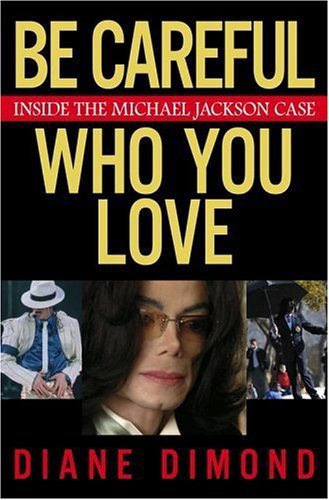
Diane Dimond's book: Be careful who you trust


Diane Dimond is no friend of 'Tabloid Baby'-- or freedom of the press.

Diane used to be a tabloid television reporter. The author of 'Tabloid Baby' used to be her boss. He wrote scripts for her, fed her lines and helped "create" her as a tabloid TV star.

But when 'Tabloid Baby' was released six Novembers ago, Diane led the media boycott of the book. She was hosting a CNBC show with Geraldo Rivera at the time. She didn't like the way she was portrayed in the book, so she stopped the author from appearing on NBC shows.

Diane later revived her career by jumping on the Michael Jackson bandwagon, claiming she'd been on the case since the late 80s. Throughout the recent investigation and trial, Diane acted more like a prosecutor than a reporter. But she doesn't have the smarts of a Nancy Grace. She was a clown in the circus and played the role to the hilt.

Her performance in the Jackson case probably ended her hopes of ever again being taken seriously as a journalist, but it did get her a book deal.

Her book is officially out today. Let's hope nobody tries to stop her from publicizing it.

(For the real story of how Diane Dimond got involved with the Michael Jackson case, read 'Tabloid Baby.' Try page 276 for starters. Let's see if Diane tells the same story in her book.)

Monday, November 14, 2005

Rock 'n' Roll Landmarks


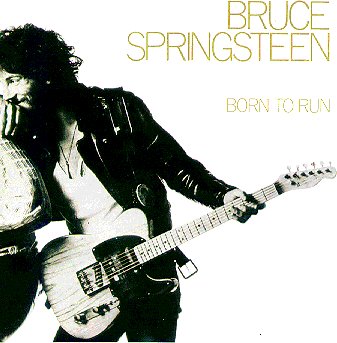
Thirty years since the release of Born to Run.

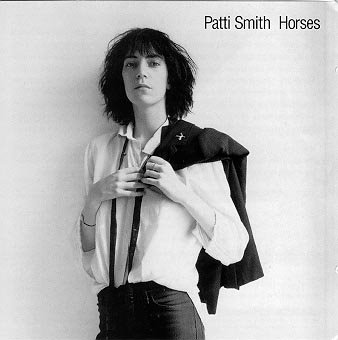
Thirty years since the release of Horses.

Six years since the publication of Tabloid Baby.

One difference:

You can still buy an original, unused copy of Tabloid Baby.


Sunday, November 13, 2005

Scandal: No justice for Patrick McDermott


Here we have a Hollywood mystery with more twists and clues than a Michael Connelly novel, all in plain sight. So why did the media drop the story?

Friday, November 11, 2005

Thursday, March 01, 2001

The Hartford (CT) Courant: Tabloids Turning Mainstream

By MARY K. FEENEY; Courant Staff Writer

It's no big news when the National Enquirer splashes celebrity scandal across its cover. But when the tabloid scoops the mainstream media on national stories twice within several weeks, editors and reporters snap to envious attention.

The Enquirer broke a story in January about Jesse Jackson's illegitimate child (and another in the Feb. 27 issue about an additional affair). Last Friday, it printed the blockbuster that Hillary Rodham Clinton's brother, Hugh Rodham, received (and then returned) $400,000 for his help in two presidential pardons.

Enquirer editor Steve Coz was featured Sunday on CNN's ``Reliable Sources'' with Washington Post writer Howard Kurtz, and the tabloid was featured in Kurtz's media column the next day. Several major news outlets, including USA Today and Salon.com, paid homage to the newspaper, which recently dished the dirt on the Anthony Hopkins-Martha Stewart romance.

But instead of admiration, perhaps the more appropriate emotion might be embarrassment.

``The thing is, the so-called mainstream media has a long history of having their cake and eating it, too, by allowing the so-called tabloid press to do their dirty work, investigating and putting stories out in the marketplace that mainstream media feels is beneath them,'' said Burt Kearns, former executive producer of ``A Current Affair'' and ``Hard Copy'' and creator of the tabloid news site www. tabloidbaby.com.

The Jackson story is one example. The Chicago and Washington media knew about it but didn't report on it.

``There are some stories they don't want to break. The Jesse Jackson love-child story was a totally legitimate story,'' Kearns said. ``Here was Jackson counseling Clinton during Monicagate, and setting the spin for the rest of the country as to how to behave. ... But they [the mainstream media] felt it was beneath them.''

At the same time, the mainstream media has been lurching toward a tabloid sensibility. So the Enquirer's recent exclusives are, in a way, doubly humbling for the traditional press, which finds itself reluctantly casting nets in the murky waters of gossip and getting whupped by its most notorious purveyor.

``On the other side, the National Enquirer is often the publication that gets it right. All of a sudden they were getting scooped by this trashy publication that was read mostly by ladies in trailer parks,'' said Jeannette Walls, MSNBC gossip columnist and author of ``Dish: The Inside Story on the World of Gossip.'' Whether you approve of their methods, Enquirer reporters are skillfull and aggressive, and the paper has 25 people ``who fact-check stuff up the wazoo,'' Walls said.

The Enquirer is, in a way, a victim of its own success.

Walls said the trend toward tabloidism all began with the death of Elvis Presley in 1977, a moment when newspapers and magazines realized that to ignore Elvis was to lose readers.

``As more mainstream publications went tabloid, they started eating away at the National Enquirer readership. The more publications covering this turf, the less need there was for the National Enquirer,'' Walls said.

When the O.J. Simpson story broke, every news outlet was chasing it.

``It was sort of horrible for the folks at the National Enquirer trying to elbow aside The New York Times and ABC News. The sort of story that would have been exclusively the National Enquirer's turf was now in the mainstream media,'' Walls said.

As tabloid news osmosed into newspapers, television and the Internet, circulation at the Enquirer fell from its peak of about 6 million after Elvis' death (when the idol in his coffin graced the front page) to roughly 2.1 million today. Unlike many other publications, the Enquirer depends heavily on newsstand sales (19 percent of its circulation comes from subscribers, according to Audit Bureau of Circulations figures from June). And most issues are not fat with ads from major companies.

Now it appears the Enquirer is repositioning itself to recapture some of that circulation, with increased attention to political scandal.

In his CNN interview, Coz said that while the Enquirer has broken major political stories in the past (including those involving the Donna Rice-Gary Hart affair and Lewinskygate), it is ``walking in the direction of mainstream journalism in that mainstream journalism spends a lot of time and energy covering Washington. And between that and Bill Clinton, Washington politicians are now celebrities.''

``We are putting a big, big push on Washington, and we have two stories in development right now,'' Coz told Kurtz.

Coz, asked whether checkbook journalism figured in the Jackson or Rodham stories, replied that it was not ``the driving force. We do pay for information. In this particular case, the payments were not made to anybody that was a principle source.''

In an interview with USA Today, Coz said that many reporters grease the skids by buying dinner for sources. ``We just skip the dinner,'' he said.

For the great majority of journalists, paying for information is a line that cannot be crossed.

``There's a very big difference between paying cash to sources for information and the practice of reporters picking up the tab at dinner when they talk with their sources,'' said Robert M. Steele, a senior faculty member and ethics group leader at the Poynter Institute.

``I do believe that anytime we pay sources, we create at least the perception of an eroded credibility,'' Steele said. ``And it raises natural questions as to whether people are giving information for their own purposes that is tainted by motives that include financial gain.''

Kearns and others said that viewpoint may be a little naive today.

``I think that's great when you're blowing dust off volumes in an ivory tower. But right now, news information is a product, whether you're on Page One of the Washington Post or being featured on '60 Minutes.'''

And the Enquirer hasn't been alone in offering incentives for news.

``I think the mainstream press has paid for news for a long time in ways they will not acknowledge. '60 Minutes' has a long history of paying for stories, but they hide it. They will pay the lawyer [for a source] as a consulting fee,'' said Walls.

Payoffs aside, the Enquirer has gained a measure of respect for breaking the stories and is probably being read in more newsrooms than ever. But will it ever, or should it ever, change its spots?

``I think the National Enquirer can do great work, but it's very hard for any publication to reposition itself,'' Walls said. ``The National Enquirer is kind of synonymous with sleazy tabloid journalism, whether or not it deserves that label ... .

``It's a little bit like saying you're a clean wrestler, but that's not going to do you any good,'' said Walls.

Wednesday, June 14, 2000

LA Weekly: Tabloid Baby

By Gale Holland

Burt Kearns was a pioneer in the trash-tabloid programs that reshaped television news in the ’80s and ’90s, bouncing from A Current Affair in New York to Hard Copy in Los Angeles and back again, often with lawyers nipping at his heels. His Tabloid Baby is a numbingly complete account of those years, written in tiresome tabloidese, but not without its moments. Kearns was fired from almost every TV job he ever held, including his pre-tabloid gig at the NBC local news affiliate in New York, apparently for lying, stealing stories, or low ratings. (Kearns’ narrative doesn’t always make this clear, but he quotes news clippings that do.) The best parts of the book are his candid confessions of the sleazy tactics — ranging from stealing a Joey Buttofuoco tape off a New York satellite feed to copying the infamous Rob Lowe sex tape off an Atlanta television screen — that got him into trouble.


Kearns also pops off some good caps at pompous media figures, including Jeff Greenfield, who greeted a tabloid cameraman who baited him during the O.J. trial by saying, “This is the kind of lack of civility that I really think is unfortunate.” What’s surprising is that the pomposity and self-importance is shared by Kearns and his tabloid colleagues. They fought studio stooges to “take television to the next level,” Kearns says over and over again. But his idea of innovation is his bottom-feeding O.J. show, Premier Story, which never even made it into syndication. (Kearns’ mentor, Peter Brennan, on the other hand, moved on to the huge syndication hit Judge Judy.) But there’s no arguing that tabloid reporters like Kearns, for better or for worse, paved the way for what he calls “the Lewinsky fellatio story.” And the boozy, Vegas-stomping, strip-club-hopping, Sammy Davis Jr.fawning life he describes, in vomit-in-the-office-trash-can detail, is emulated by mainstream media personalities today.

Sunday, January 09, 2000

The Sunday Age: The New York Postman

Melbourne, Australia

by ANDREW RULE

STEVE Dunleavy is at the bar, telling war stories. He is as thin as the wisp of smoke curling from the cigarette in one hand, but his voice is as strong as the vodka and tonic in the other, the accent almost surviving 40 years away from home.

He's on the natty side of well-dressed, still handsome in a rakish way, with the trademark quiff of silver hair that, a lifetime ago, was surely a Sydney lair's sharp brushback.

The wide boy from Bondi has been called a lot of things in his time, not all of them printable, but one description - ``the Keith Richards of journalism"- gets him pretty right, even if he does look more like Peter O'Toole than a Rolling Stone. The comparison underlines not just his astounding survival of decades of hard living but his fierce dedication to his craft. 

It's only rock'n'roll but he likes it, and has stayed true to his one true love, resisting temptations to do something easier than chase the next story. And, at 60, he's still got what it takes to make the grade in Gotham City.

Building a reputation as the ultimate tabloid newshound has made Dunleavy famous, if not rich, in his adopted country. His boss, Rupert Murdoch, might be the most powerful Australian in America, but he wouldn't be as recognised - or as loved - in the street as Dunleavy, who's worked for him for years.

These days he's back writing a column for the New York Post, the smudgy tabloid he made infamous in the 1970s and 1980s before playing his part in taking the genre to television.

Not that Dunleavy wastes much time at the Post office, which is on the 10th floor of the Sixth Avenue skyscraper from which the man he calls ``The Boss" rules the News empire. If he's not out of town on assignment, then he's mostly in his usual spot here at his usual bar, an upmarket Irish pub called Langans in West 47th Street around the corner from the News building in midtown Manhattan.

On the wall behind the bar there's a poster with a picture of him over the slogan DUNLEAVY FOR PRESIDENT. He holds court among a floating group of media identities who drop in during the afternoon to tell him things and hear him dispensing advice, wisecracks and stories from a bottomless fund garnered over 45 years on the road and polished smooth with time and re-telling.

When he was a kid on the Sydney `Daily Mirror' Dunleavy let down the tyres of a rival to beat him to a crime scene. The rival was his father, Steve Dunleavy senior - a photographer for the Sydney `Sun'. Later, father and son were rivals again in the chase after the `Kingsgrove Slasher'. Young Dunleavy hid in an outhouse, hoping to catch the crook and cover himself in glory, when he heard the deadbolt lock the door from outside. He stayed locked in while the `slasher' was arrested a few yards away. The man who turned the lock? His father, paying him back for the flat tyres.

Dunleavy is charming and courteous to all, but tough as well - somewhere between an old ballroom dancer and an old lightweight fighter. Which isn't surprising, as he did a bit of both in his youth. Put him in a bow tie and he'd be the boxing referee from central casting - a surefooted showman at home in centre ring. Poker-faced, nimble - and as wise, as Runyon would have said, as a treeful of owls.

It's tempting to think Runyon would have loved Dunleavy. If only because the Australian who found his spiritual home in New York City is perhaps the closest thing living to the legendary newspaperman who also migrated there - from the west - nearly a century ago.

Runyon dearly loved characters, and as a character Dunleavy is 24-carat box office. People are drawn to him.

Burt Kearns, for instance. Young enough to be Dunleavy's son, Kearns arrived in New York City from a sleepy suburban newspaper the night John Lennon died, and elbowed his way up in television newsrooms before getting his big break - working with Dunleavy and several other Australians to set up the hugely successful but shortlived tabloid show A Current Affair.

It was a rollercoaster ride, and it prompted Kearns to write a book about the era - a rollicking number called Tabloid Baby billed as ``the first and best insider account of a movement that changed the face of television news".

Kearns, now a television producer based in California, is back in New York to launch the book. It's during the launch that he coins the Keith Richards' line about his old mate, whom he treats as a lovable but eccentric uncle. There's plenty more where that came from, in the book.

``Dunleavy, the ageless legend with his silver pompadour, eagle beak profile and rakish charisma, was the paragon of everything that made journalism romantic and dangerous," he writes.

``He was friend to cops and criminals, bums and kings. He knew the words to any show tune you could toss at him. He could do more dialects and accents than Sid Caesar. He was a master raconteur and joketeller, his words a perfectly constructed Shakespeare of the street."

Dunleavy, sent to cover an execution, had been invited by the prison authorities to witness the condemned convict's death. He watched as guards buckled the terrified man to the electric chair with large seatbelts, winced as smoke rose from the twitching body when the current was turned on. Later, he leant over to one of his crew and stage whispered: ``Who says seatbelts save lives?"

The old street dog, as Kearns calls him, would do anything to get a story, but remained pure by his own peculiar standards - untainted by pretension and hypocrisy, although he'd plead guilty to most other vices.

He was one of a push of larrikin Australians who, working for Murdoch, the outsider, recruited American disciples like Kearns and tilted at the established networks' television news - eventually changing American news coverage forever. It was intoxicating at the time- though not necessarily, he admits now, for the better.

Dunleavy had become a star of print with the Post at the height of its fame - the Son of Sam serial killer coverage and ``Headless Body in Topless Bar" headline were in his time. But after switching to Murdoch's television enterprise he became a national figure on prime-time television. By the time he returned to his desk at the Post three years ago he was a legend of the tabloid genre he had helped define in the United States.

He was, some say, the inspiration for the tabloid reptile reporter in the film Natural Born Killers.

Then, of course, there were his books.

With a wife he ghosted The Happy Hooker, the memoirs of call girl Xaviera Hollander. His novel, The Very First Lady, concerned a woman who murdered her way to become the first female US President. But it was Elvis: What Happened? that really made his name. The book, which exposed Presley's sordid life of drugs and violence, was instantly controversial because the King of Rock died only two weeks after it was published.

Dunleavy made about $25,000 from the Elvis book, a tidy sum in 1977, but nothing compared with the millions the best-seller made for Murdoch. Dunleavy didn't care. He was happy to get the story first, driven only by the fear that he'd be beaten and content that his junkyard-dog loyalty would be rewarded by an organisation that would take care of him for life.

Once, during his time in television, Dunleavy responded on camera to charges by another author, Albert Goldman, in `Life' magazine, that his book had caused Presley to kill himself.

The interviewer, a friend, put Goldman's accusation to Dunleavy, who snatched the magazine and threw it to the studio floor, snarling: ``This is absolute garbage!"

The director asked him to do it again. Dunleavy shrugged, smiled calmly, then did it all again, snarl and all. Take two.

Afterwards he grabbed a colleague and said, deadpan, ``This book, this accusation that I killed him, that he committed suicide, mate-" His eyes lit up and he blurted gleefully: ``I really think it's true, you know! I think I really killed Elvis."

These days he has the column - often filed from Langans bar - the Manhattan apartment, the Long Island house, and the reputation that makes every day like an episode of This Is Your Life. It's a long way from where he started.

Born at Bondi just before the war, he was educated at Randwick High, where he played rugby and played up. A copy boy at 14 on the Sydney Sun, he talked his way into a cadetship with the Mirror, where he was in opposition to his photographer father.

He chuckles over the rivalry with his father, who was a colorful character, too, it seems. In the 1950s, when Frank Sinatra was in Australia with Ava Gardner he pushed Dunleavy senior's big Speed Graphic camera into his face. The photographer couldn't get to Sinatra to even up, but he punched his bodyguard Hank Sanicola instead. When Steve junior finally got to interview Old Blue Eyes in the 1980s, he had the satisfaction of thinking about that story.

After earning his spurs in the Sydney tabloid wars, young Dunleavy left in 1959, aged 20. His first stop was the Philippines ``poncing around getting drunk", he recalls. Then he worked for the Stars and Stripes in Tokyo for two years. ``In those days you could work for a newspaper and freelance for another."

He also worked in Hong Kong, on the South China Morning Post and the Far East American, ran his own bar, and did song and dance as a sideline before leaving the East under mysterious circumstances, smuggled out with a price on his head after running foul of the triads.

In New York his rabid winner-takes-all attitude was a winner. He was home. As news editor of Star magazine, he ``exhibited a greater handle on the middle and lower-class American psyche than any graduate of an American journalism school," claims Kearns. His tongue-in-cheek reactionary patriotism won him, hilariously enough, the American of the Year Award from the far-right wing John Birch Society.

Then, of course, came the 1970s and his time as metro editor of the Post at the pinnacle of its time as leader of the yellow press, stirring up fear, excitement and opinion.

He's been back to Australia only four times in 40 years. The long trip across the Pacific combined with the no-smoking rule don't make visits more likely in future.

Regrets?

None that he'll admit to. He says some people see him and his ilk as a ``cross between a pimp and a private eye". He chuckles and says, ``Waal, I don't worry about it. Because we were honest to our product. We take no prisoners. We make no excuses. If we got caught it was curtains. If we won, we were the victors. One thing we weren't were hypocrites."

His creed, he says, is: ``Don't complain ... but don't explain."

Of his longtime boss, Rupert Murdoch, he says loyally: ``He is the most vilified American since Mad Dog Coles was shot in Chicago." He pretends not to hear suggestions that the otherwise ``fearless" tabloids aren't quite so brave when it comes to turning the spotlight on Murdoch's domestic affairs.

And the biggest story?

The old brawler flicks this aside with ease. ``The one you did yesterday," he cracks.

Seconds later, he gets serious. When man landed on the moon in 1969, he muses, he was booked into a bed and breakfast place, covering the Ted Kennedy scandal after Mary Jo Kopechne drowned in the wayward senator's car at Chappaquiddick.

Exactly 30 years later, in mid-1999, he slept in the same bed in the same place, covering the death of Ted's nephew, JFK junior, when his plane went down.

``Ted gets bumped off the front page (on the anniversary of Chappaquiddick) because of the death of his own nephew," he says, shaking his head at this enormous coincidence as he fishes another Parliament cigarette from the pack on the bar.

He even claims to remember the room rates. In 1969, it was $38 a night. Thirty years later, it was $320. How can you doubt a man who comes up with details like that?

It's lunch time and the crowd swells in Langans. One of the new arrivals pulls up a stool next to Dunleavy and orders a cheeseburger and coke for lunch.

He is thirty-something, good-looking, well-dressed and a sharp talker. Dunleavy introduces him as Sean Hannity, a friend of his. Hannity says wistfully that he'd love to stay and have a drink and a talk, but he's gotta do the show, y' know.

Hannity, it turns out, does three hours of drive-time radio followed by two hours of prime-time current affairs television in the biggest market in the US, which is probably as big as there is on Earth. There are huge billboards with his picture on them around the city. He's big time in the big city with the bright lights.

So, how does he rate the old Aussie at the bar?

``Dunleavy?" He smiles. ``He holds court here every day and dispenses wisdom and people listen. Yeah, he's still cutting edge."

Wednesday, December 08, 1999

Salon.com: Tabloid Nation


The man who produced "Hard Copy" and "A Current Affair" remembers the gory, golden age of trash TV.


Tabloid television isn’t dead. Shows such as “A Current Affair” and “Hard Copy” that thrived on news, gossip and scandal and brought the world dramatic reenactments and hidden-camera scoops were simply made redundant.

Burt Kearns was a producer on both of those shows. To hear him tell it, tabloid TV simply morphed into network news magazines, syndicated talk shows, ceaseless cable “news” coverage and those morning programs where the men all wear sweaters and the coffee is decaffeinated.

“When I want to watch my tabloid stories now,” says Kearns, “I’ll watch the ‘Today’ show. There’s no better tabloid team than Matt Lauer and Katie Couric.”

This may come as news to anyone who thinks tabloid TV was, in its purest form, all about Elvis sightings and ax murders. But for Kearns, who is in New York promoting his book “Tabloid Baby,” an amusing if somewhat self-serving account of his years in the business, most people just don’t get it. And that includes many of the programmers who imitated and co-opted the brass-tacks style of his early shows. “Nobody is covering those stories the way we covered them,” he complains. “They’re doing it the network way. They’ll do a story on a UFO cult and cut to Keith Morrison at NBC and he’s rolling his eyes. They still look down on people.”

Kearns doesn’t look that different from any number of Los Angeles TV producers. An affable, good-looking man in his early 40s, he’s talking to me between appearing on a panel on tabloid TV and doing a radio interview. Appropriately, he has chosen Langan’s — an Irish bar in midtown Manhattan frequented by New York Post writers — for our interview; so much of “Tabloid Baby” (which covers the period from Kearns’ 1989 arrival at Fox’s “A Current Affair” to the cancellation of Paramount’s “Hard Copy” earlier this year) floats by on a sea of vodka. And Steven Dunleavy, a Mephistophelean character in Kearns’ book, writes a column for the Post now. In fact, during the interview he appears at the bar as if conjured and signals the barman for a refill while lighting a Parliament.

“Joey Adams died today,” says Dunleavy solemnly in his Aussie accent. He’s wearing a corduroy jacket that nearly matches the color of his tan, and he sports a Porter Wagoner-style pompadour.

“No shit?” says Kearns. Adams, husband of Post gossip columnist Cindy Adams and aggregator (if not author) of a million one-liners, had been ill for some time. “Cindy was supposed to be on this panel with me last night but said she had family business.”

There is a beat before he adds: “At least it was a real excuse.”

With its hard drinking and quick cynicism, the world that “Tabloid Baby” limns is a sort of throwback to yellow journalism’s days of yore. “In the worldview of ‘A Current Affair,’” Kearns writes, “people didn t insult the Church, and sex was naughty — the word unsaid, only spelled out, S-E-X — values needed to be upheld, and all offensive images needed to be shown in as explicit detail as the lawyers would allow.”

This combination of titillation and hypocrisy was imported from Australia by Rupert Murdoch, who staked his claim to the States when he purchased 20th Century Fox and the Metromedia TV stations in the mid-’80s and formed the Fox Broadcasting Corp. And when he needed news magazines, he didn’t look to “60 Minutes” as a role model. He called on some of the same Aussie journalists who had reinvented the print tabloids for him there — men like Dunleavy and Peter Brennan.

It is Brennan whom Kearns credits with splitting the atom of the tabloid-TV formula. “Now, you get back from a story, what happens?” Brennan would ask his charges. “You talk to people. You go to a bar and your friends say, ‘What were they really like? What really happened?’ If you give an answer that wasn’t in the story, if the viewer or your mother can ask what the people in your story are really like, you’ve told the typical television version of the story. ‘A Current Affair’ tries to do the story between the lines and turn it into lines.”

For Kearns, who came to Fox from WNBC, this new way of reporting was liberating. “In the so-called legitimate news,” Kearns tells me, “the idea was to make sure you have the same story everyone else does and make sure you cover it the same way, and make sure you have what everyone else has. With ‘A Current Affair,’ you’d walk in each morning and say, ‘What’s the most interesting story going on right now?’”

And according to Kearns, they didn’t take their lead from the supermarket tabloids, either. The “Current Affair” staff scanned hundreds of newspapers for offbeat stories. They broke a map of the United States into five sections, like the five boroughs of New York, and assigned reporters to cover each. And, OK, they pissed off a number of celebrities in the process.

“It was never journalism,” Kearns says of what they were doing. “It was what the Australians would call a piss-take on journalism.” And it was much safer — and more just — to “take the piss” out of public figures like Steven Spielberg, whose divorce from Amy Irving got the “Current Affair” treatment, including clips from “Jaws” that equated interloper Kate Capshaw with Bruce the Shark. This resulted in a phone call from Spielberg to Fox studio head Barry Diller, which Kearns interprets as follows:

“Hello, Steven!”

“Barry, if I live to be 90, I will never do a movie for Fox.”

Kearns estimates that cost the company around $500 million.

In an effort to infuse the show with some semblance of respectability, Murdoch sent Anthea Disney to police the troops. Disney had worked her way up through the ranks of Murdoch’s empire, starting as a Fleet Street reporter. She cultivated a tough-cookie persona (I worked for her myself at another venture) and she put the “Current Affair” staff on notice. She told Variety that she was under orders to make the show “more New York magazine and less New York Post.” Kearns, who had advanced to executive producer, saw the writing on the wall and resigned to go to Hollywood and join the rival tabloid show, “Hard Copy.”

Disney is one of many who may not be pleased at how they are depicted in “Tabloid Baby.” Her stated desire to class up “A Current Affair” clashed with some of the excesses that occurred on her watch — most notably Steve Dunleavy’s payment to a witness in the William Kennedy Smith trial. (The $40,000 he paid to Anne Mercer, who drove Smith’s alleged victim from the Kennedy mansion that night, caused Mercer’s testimony to be discredited. “I have to thank Steve Dunleavy for what he did with Anne Mercer,” Smith’s attorney said when his client went free.)

Kearns is not above floating a few old rumors about Disney’s marital problems and personal life in his book, and says that she tried to keep it from getting published. “She was running HarperCollins at the time,” he says. “She’d seen the book. It went to her company. She didn’t want it published. I don’t hold that against her.”

“Bullshit,” says Disney, who is now vice president of content at News Corp.  “I never saw his book and wasn’t aware that it came to HarperCollins. It makes a much better story to say that someone tried to stop your book than to say that no one wanted to publish it.”

The Kennedy Smith saga was a “Hard Copy” exclusive at first; “A Current Affair” and “Inside Edition” tried to take the high road. “And the network guys didn’t understand that it was news,” says Kearns.

“Shows how wrong they were. And it showed how little sleazy tabloid stories can turn into news. It ignited the whole debate on date rape, naming the victims in rape trials.” (It’s worth noting that the New York Times was one of the first papers to identify Smith’s accuser by name.) “And then, months later, when Clarence Thomas was up for the Supreme Court judgeship, and he got involved in the thing with Anita Hill, Teddy Kennedy, the great voice of liberalism, couldn’t open his mouth because he’d been shamed in this case.”

One could argue that almost any Kennedy story can be made into tabloid fodder without turning the dial too far, what with that big back story of family tragedy and misadventure. The first real crossover tabloid story of the ’90s broke on May 10, 1992, when Amy Fisher shot Mary Jo Buttafuoco in Massapequa, N.Y. It had all the elements of a true-life soap — the clueless wife, the loutish Lothario, the mystery vixen — save one.

“There was no one in the story you could feel sorry for,” says Kearns, “no one that you could identify with. In every tabloid story there is one character — you see [the story] through that person’s eyes, you identify with that person. In the Buttafuoco story you couldn’t identify with the victim.” As the story morphed and grew, with new revelations every week and more and more perfidy captured on tape, the nation reached saturation. Even People magazine now seemed to subsist on the “Long Island Lolita.” We had become a tabloid nation.

O.J. Simpson, of course, gave us victims we could identify with and a slow train wreck of a trial that was virtually inescapable. The “tabloid babies” of Kearns’ narrative had crossed over to the networks (even as some network people went in the other direction). The first time “Nightline” covered the murders, five days after Nicole Simpson and Ron Goldman were killed, Ted Koppel apologized; when the ratings went through the roof, he quit saying he was sorry.

Soon it was all O.J., all the time, from Regis and Kathie Lee in the morning to Jay Leno jokes at night. The trial itself took center stage and tabloid TV as practiced by Kearns and company seemed downright quaint. “When the world was watching from their offices live,” he says, “we were repackaging it with alliteration and music — who needs that shit?”

Today, in place of “Hard Copy” and “A Current Affair,” we have “Dateline,” “60 Minutes II,” “20/20″ and “48 Hours” — and that’s just on the networks. Kearns wrote some pilots and cast about for a new project.

His collected notes came together in “Tabloid Baby,” which he is promoting now with the help of his wife, Allison Holloway, another veteran of the scene. He doesn’t come out and say that he couldn’t get arrested after a career in tabloid television, though he admits his prospects looked dim. His last project was for Fox: “When Pets Go Bad II.” I ask him how people come up with ideas like that.

“You walk into a room, it’s like the monkeys with the typewriters,” he says. “It’s full of video monitors and people are transcribing every piece of video in the world. And they might find they have 10 great pieces of video of animals attacking people — ‘When Pets Go Bad!’” Voila.

A lot of it is in the packaging — like that film of a donkey sexually assaulting a man whom the beast had found defecating in his pasture. “Fox has always wanted to air it but never could,” Kearns claims. “Every time someone presented it to them they would put on ragtime music and sound effects — ‘Boing!’ I saw it and was horrified. This makes ‘Oz’ look like ‘Touched by an Angel.’ It was horrific. So I played it very straight and put some scary music behind it — ‘This man is invading the territory of an animal …’”

For the holidays they had footage of a Santa being attacked by one of his reindeer. It was a reenactment, actually. The injured Santa was demonstrating how he’d been attacked, but things went badly. “He was screaming, ‘Help!’” Kearns recalls, nursing the last of his beer. “We thought he was doing it for the camera but, no, he was bloody. It rated very well.”

Sean Elder is a frequent contributor to Salon.

Tuesday, December 07, 1999

The Hartford Courant: The High Times of Tabloid TV

By DAVID DALEY; Courant Staff Writer
 
NEW YORK — It would have been the first shot of the tabloid decade: Frank Sinatra, all teary-eyed, mourning the death of his pal Sammy Davis Jr. In 1990, Burt Kearns rented a hidden camera and weaseled his way into the private ceremony at Forest Lawn Cemetery in Los Angeles, determined to get the shot for ``A Current Affair.''

``Ah, yes, Sinatra at the wake, crying over his little buddy in the box,'' Kearns, remembering the scene, said with a chuckle at a midtown Irish pub last week.

Nothing went as planned. The tiny camera he expected turned out to be a VHS recorder better suited for family birthday parties than sneaking into a funeral. When Kearns made his way past Casey Kasem and Little Richard and tried nonchalantly to score the shot of Sinatra, just five rows in front of him, ``his silver Caesar hairpiece taunting like a bull's-eye,'' security stopped him right away.
 

Kearns devised a back-up plan. He'd get Sinatra in a reflective mood as he walked back to his limousine. Sinatra's aides escorted the crooner out a side door. Kearns said his goodbyes to Little Richard and searched outside for his prey, looking for the hairpiece glittering in the sun. He found him, maybe 20 feet away, locked in the shot and shouted, ``Frank!''

``The way Sinatra turned around, I'll never forget it,'' Kearns said. ``Everything froze in that moment. Security jumps on top of me. I'm going down, screaming, `Frank! Frank!' Sinatra, in slow motion, turns around and looks at me like he's looking at a piece of dirt, then turns back and gets in the car. He didn't even react.''

That day, Kearns had to settle for a consolation prize, eavesdropping on Mary Hart and Chita Rivera back at the post-funeral gathering at Davis' Beverly Hills home and rummaging through his bathroom medicine cabinet in search of his glass eyes. But successful or not, it was another grand tabloid adventure for Kearns, and quite a long way from the staid, small-town papers in Ridgefield and Wilton where the Connecticut native covered his first stories.

Kearns grew up in Norwalk and Trumbull and moved to New York the night John Lennon died, when he realized he was wasting his time covering Wilton planning and zoning commission meetings.

He relates dozens of raucous adventures in his new memoir, ``Tabloid Baby'' (Celebrity Books, $27.95). It's a rollicking remembrance that romanticizes tabloid TV, as if the shows ``A Current Affair'' and ``Hard Copy'' were Hearst and Pulitzer battling over the Spanish-American War in the early days of yellow journalism.

Kearns helped pioneer tabloid TV as executive producer first of ``A Current Affair'' and then ``Hard Copy.'' He masterminded the theft of the Rob Lowe sex tapes; made William Kennedy Smith, Joey Buttafucco and John Bobbitt household names; and gets the credit for spying O.J. Simpson pal Robert Kardashian carrying what appeared to be Simpson's missing overnight bag away from his Brentwood estate.

Early on, Kearns learned the most important lesson of tabloid TV: If a story seems too good to be true, don't make too many calls checking it out. And he's delightfully unapologetic for all that tabloid TV has wrought in lowering the national common denominator.

``It's a great way to live. There's a purity in going after the story, writing it first and getting it before anybody else gets it,'' said Kearns. ``Tabloid TV was a noble cause when it began. It was not sleazy. It did not talk down to viewers. It democratized TV. ... We took the stories that were being ignored, and we made them big.
 

``The great freedom and the great wonder of it was you could just go out there and say, `Here's the story.' It's not'' -- here he adopts the pompous tone of a network anchor -- ``Clarence Thomas today was interrogated by the Senate, and Anita Hill had her say. We'd say, `Come on. Let's bring Long Dong Silver out!'''

But the shows that really learned from tabloid TV -- and ultimately led to the demise of ``Hard Copy'' and ``A Current Affair'' -- were the network newsmagazines. At Kearns' Park Avenue book party last week, tabloid veterans blamed the ``Dateline NBC''s of the world for destroying their shows by co-opting their stories.

``We weren't going out there in search of any journalistic Holy Grail. We were working for a buck,'' said former ``Current Affair'' correspondent Steve Dunleavy, now a pitbull columnist at the New York Post. ``But we really did enjoy being able to prick giant balloons. The people who turned their nose up at our particular menu, like Mike Wallace and `20/20,' suddenly started doing what we did.''

Adds writer Anthony Haden-Guest: ``The whole of the mainstream press has been tabloid-ized, by the tabloids. When you can open The New York Times and find a fairly accurate description of the presidential penis, and when a housewife can open a magazine and find out more about the president's sex life than she knows about her husband's, something very dramatic has happened.''
 
Kearns, however, suggests that the respectable press has always overstated the differences between itself and the tabs. To him, a tabloid story is simply one with a lot of emotion, real characters and a moral at the end -- a story with all the elements and drama of real life. He's started a new Web site -- tabloidbaby.com -- that promises links to the best tabloid stories of the day, and he revels in how they come from places people might not expect, like The New York Times, the Los Angeles Times and the Dallas Morning News.

``People used to accuse us of getting our stories out of the supermarket tabloids. Well, we didn't,'' Kearns said. ``I read 200 newspapers a day. We'd get stories from the nation page of The New York Times. The New York Times is one of the best tabloid papers in the world. We'd get stories off the B-sections of small papers. The story about the woman who killed her husband because she put him through medical school and he left her for a younger woman came from two paragraphs in the San Diego paper.''

Now, everything didn't come from the inside of some small-town paper.
 
``We did illegal things. We stole satellite feeds. We stole tapes. We blackmailed. We admitted we paid for stories. We were swashbucklers,'' he said. ``But back then, the network people would say the difference between the news and the tabloids is that we were out for ratings, and they were out to do the news. Well, things changed, and we led the way. We were too successful for our own good.''

The tabloids received two key assists in changing the face of network news, one from O.J. Simpson, and the other from Bill Clinton. Kearns started a tabloid show of his own in 1994 called ``Premier Story'' that was designed to go against ``Nightline'' at 11:30 p.m. But pretty soon it was hard to tell the tabloid from the network news show.

Only the network newsmagazines, Kearns said, are trashier than the tabloids and don't respect what he calls, with some irony, tabloid mentality. To the networks, tabloid is easy: blood, guts, sex and Elvis.''

``I watched `Dateline' the other night, and they were doing a love-triangle murder, and they showed photos of the crime scene with a woman's dead body on the floor of the living room. We would never have done that,'' he said. ``They show it in the courtroom, and people are revolted. You're going to show that on television? But the news people can do it. News can get away with a lot of things.''